
St. Augustine grass is one of the most popular lawn grasses in Florida, for lots of reasons.
- It tolerates our heat and humidity.
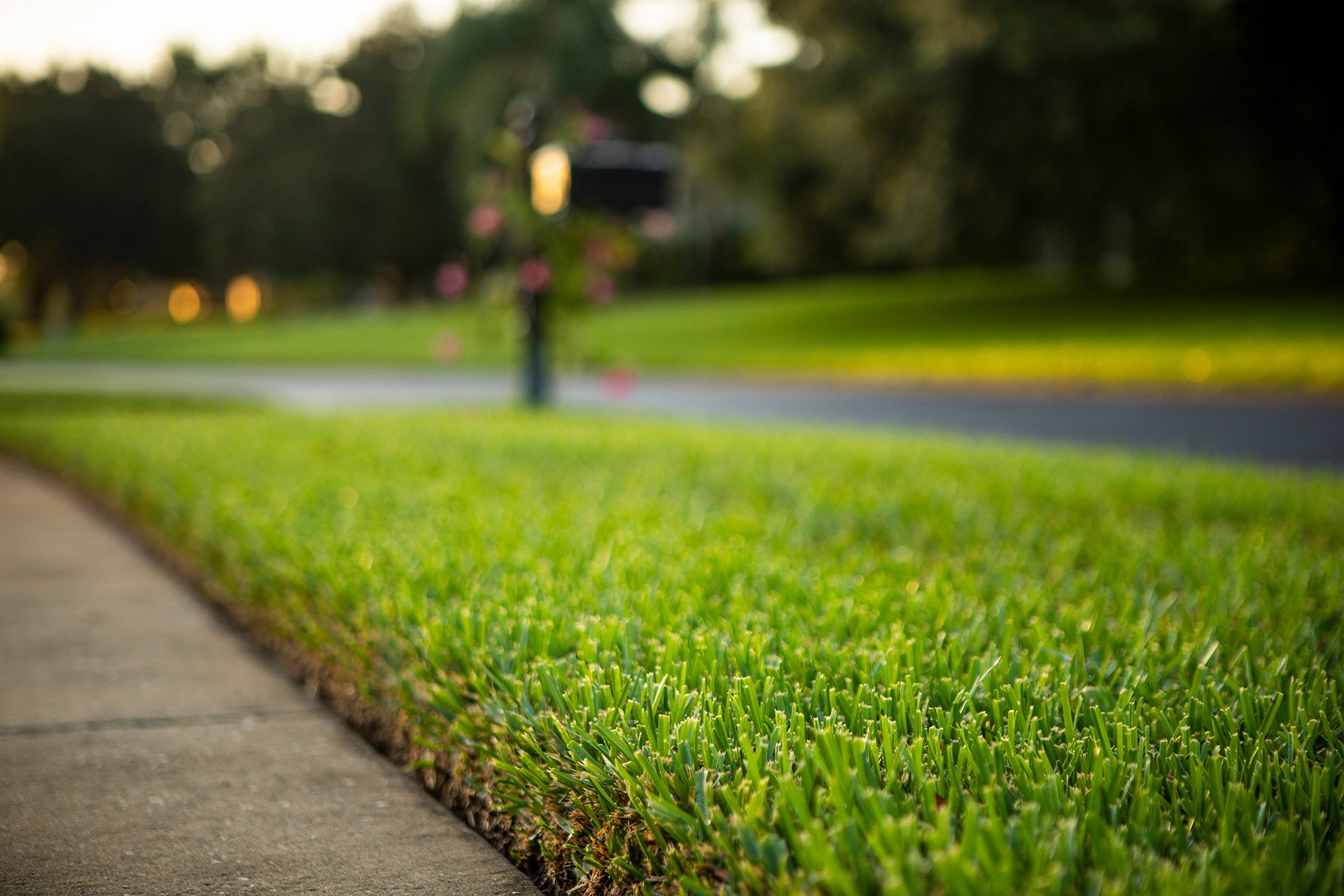
- Its attractive blue-green blades form a dense turf that establishes quickly and easily.
- It thrives in a variety of soil and light conditions.
- Some varieties do well in shade.
You get the idea. St. Augustine sod is pretty great.
We recommend three different types of St. Augustine: Classic, Floratam, and Seville.
Let’s take a closer look at St. Augustine grass and see which variety is best for your lawn.
Classic St. Augustine Grass
If your property is a mix of sun and shade — and many are — St. Augustine Classic is a great choice.
Classic St. Augustine Grass Appearance:
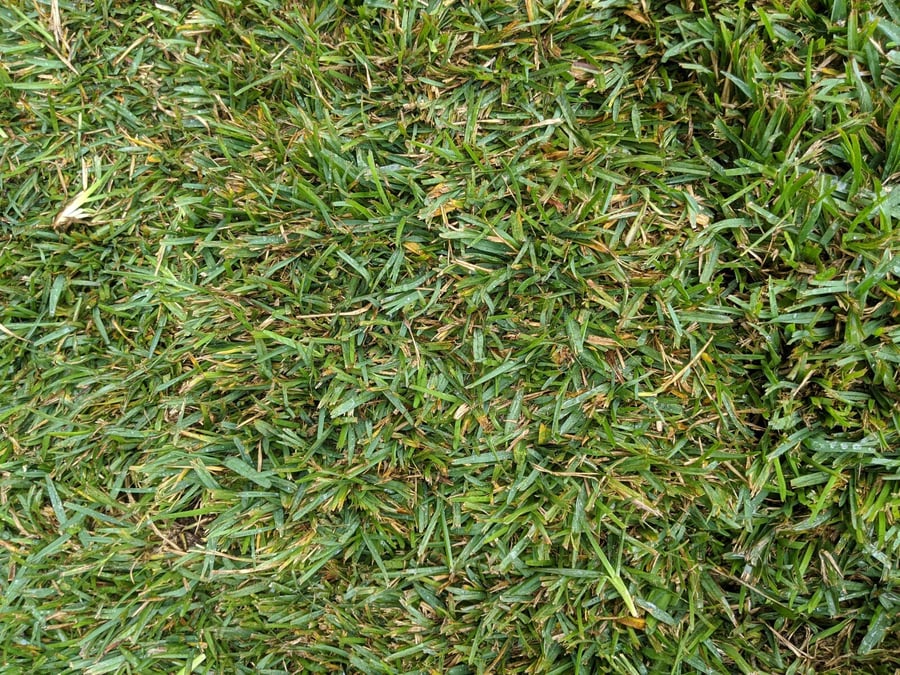
The Classic variety of St. Augustine has wide blades and a beautiful, rich green color.
Sunlight Requirements:
Classic St. Augustine requires direct sun or partial shade.
Maintenance Needs:
Classic St. Augustine is best maintained with a standard rotary mower, cutting no more than 1/3 of the leaf blade off per cut. It needs mowing approximately 46 times each calendar year. Water 2- 3 times per week during the warm, dry season.
Pests and Diseases:
It has better disease and insect resistance than other types of St. Augustine.
Drawbacks of Classic St. Augustine Grass:
Classic St. Augustine is not drought tolerant. It also is not traffic tolerant and requires a lot of maintenance.

Floratam St. Augustine Grass
This is the most common type of grass today for homes and businesses in the Central Florida area.
Appearance of Floratam St. Augustine Grass:
Floratam is a thick grass with deep roots. It has a coarse texture and the blades are longer than other St. Augustine grass types.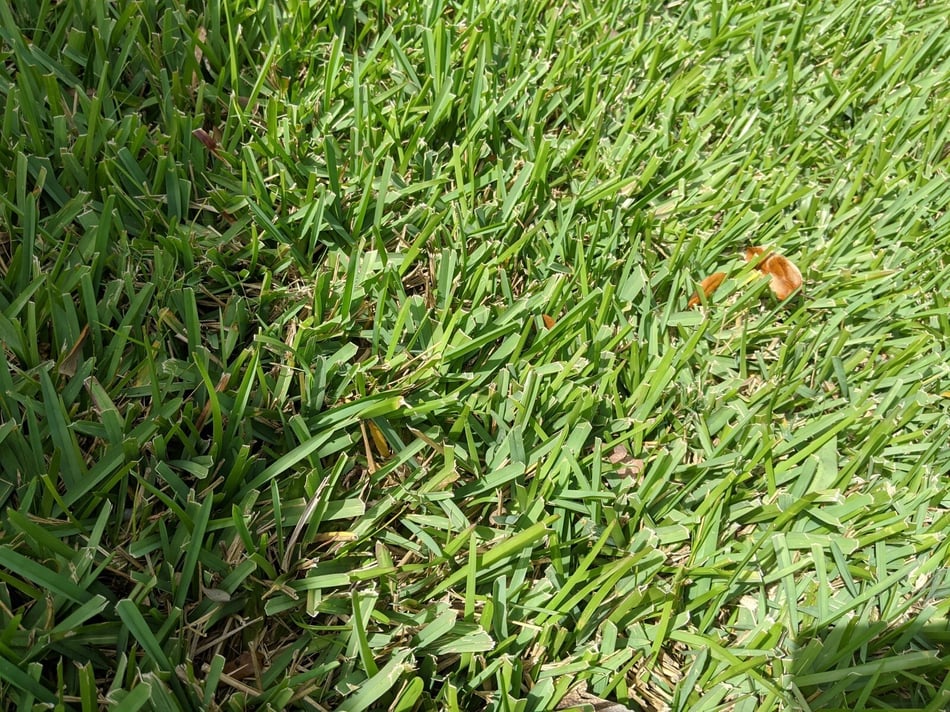
Sunlight Requirements:
Floratam St. Augustine needs plenty of direct sunlight, a minimum of six hours or more per day.
Maintenance Needs:
Floratam is best maintained with a standard rotary mower, cutting no more than 1/3 of the leaf blade off per cut. Grass should be maintained at 4 to 4.5 inches high. It requires mowing approximately 46 times each calendar year. Water 2-3 times per week during the warm, dry season.
Pests and Diseases:
With Floratam St. Augustine you need to watch closely for sod webworms and chinch bugs. Look for signs of fungus.
Drawbacks of Floratam St. Augustine:
The grass type is not drought tolerant or traffic tolerant. It is also not low maintenance.
Seville St. Augustine Grass
Seville has been around since 1980, so it has a proven track record. Its big claim to fame: it thrives in shade.
Seville St. Augustine Appearance:
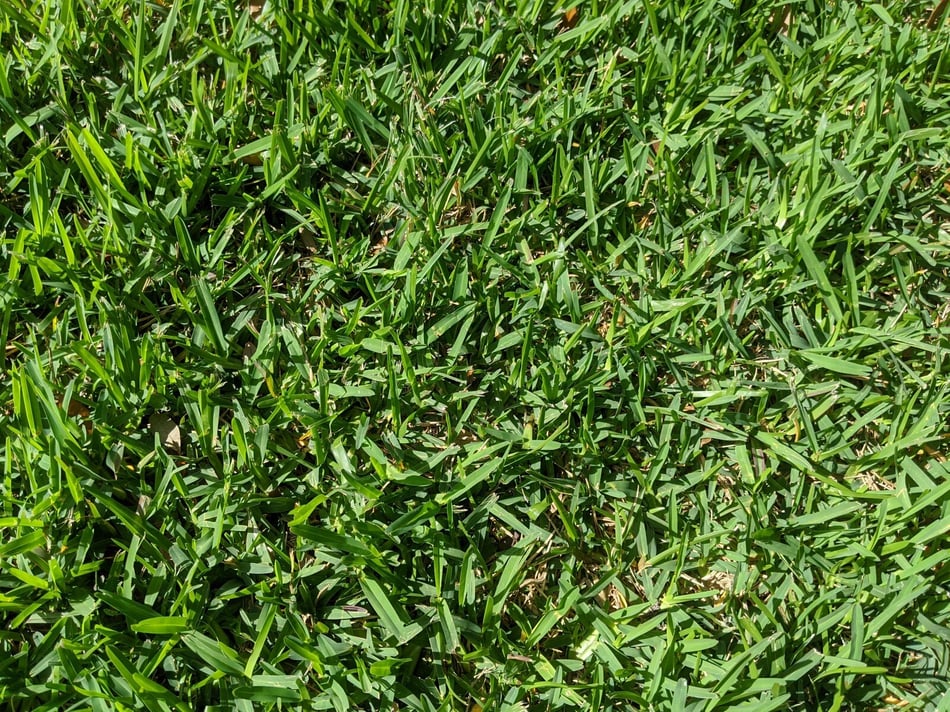
Blue-green in color, and considered a dwarf St. Augustine grass, which is popular with many Florida homeowners.
Sunlight Requirements:
Seville needs a minimum of just two hours of sunlight per day, making it a perfect grass for shaded areas where other grass struggles.
If you have less than two hours of sunlight a day, then grass isn’t your best option. Better to opt for a shade-loving ground cover, like Asiatic Jasmine, ivy, Mondo grass, or liriope.
We’ve found from experience and over time that Seville tends to develop thatch after several years when installed in direct sunlight. So keep this variety of St. Augustine turf in mind only for shaded or partially shaded areas.
Maintenance Needs:
Seville St. Augustine can be cut as low as 3 inches and as high as 3.5 inches to achieve maximum health. Drought tolerant, it doesn’t need as frequent watering as the other types of St. Augustine grass.
Pests and Disease:
With Seville grass, fungus can be a major concern in very wet areas.
Drawbacks of Seville St. Augustine Grass:
This grass type is not traffic tolerant. It also is not low maintenance.
Trust Your St. Augustine Lawn to Ground Source in Central Florida
Think St. Augustine grass might be for you? Let us help you figure it out.
We’re sod experts, but our skills don’t stop there. We’re with you every step of the way as you plan your perfect outdoor space.
Sod, irrigation, landscape design: Let us transform your yard from an embarrassing eyesore to a place you spend every spare minute.
Are you ready to enjoy the vibrant, impressive yard you've always wanted? Request a quote today! We’ll help you review your options and then transform your property.